Also in this issue, Rika Lesser’s poems
_______
Photo credit for Rika Lesser: Photo by Perry Cohen
Photo credit for Elisabeth Rynell: © Elias Österberg
_______
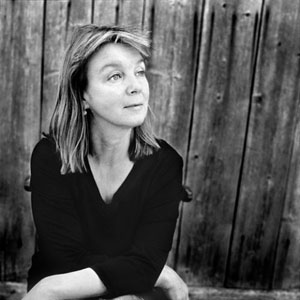
Elisabeth Rynell
Translations and Introduction by

Rika Lesser
Elisabeth Rynell:
Nocturnal Conversations
Elisabeth Rynell, one of Sweden’s most highly regarded women writers alive today, was born in Stockholm in 1954. She has lived in London and traveled overland through Iran, Afghanistan, and Pakistan to India. For decades a resident of Sweden’s remote north (Älvsbyn, Lycksele, Umeå), Rynell now divides her time between Stockholm and Delsbo, a community in Hälsingland, farther south in Norrland.
Her
writing is lyrical, straightforward or oblique as need be—not a word is
wasted—and has been praised for its emotional intensity, openness, and
sensuality. She writes of beauty
and terror; over time Rynell’s tales increasingly
cross into borderlands of myth and fable.
She made her literary debut with a collection of poetry in 1975. Eleven more books ensued; four are
works of fiction, one is nonfiction, and the other six are poetry, so far.
After
the sudden death of her 32-year-old husband, Elisabeth Rynell
began writing works of poetry and prose that are still widely read and esteemed
in her native Sweden. The poetry
collection Nattliga samtal
(Nocturnal Conversations, 1990) came first; and her breakthrough novel Hohaj was
published in 1997, bringing her five major Swedish awards. Hohaj has been translated into
multiple languages, including German, Latvian, and Russian. With a 2013 Translation Fellowship from
the National Endowment for the Arts, I hope to complete an English translation
of the novel within that year.
The back jacket copy for Nocturnal Conversations, from which these poems come, states: "Elisabeth Rynell’s new collection of poems is a lamentation, a strong and poignant love song, dedicated to her dead husband." There is no table of contents, but the book is divided into three parts, the heart of which is an extended “lay” or “lamentation” for Ulf, dead at 32. Rynell uses the Swedish word “kväde” for “poem” or “song” that is used in the Eddas, specifically in Gudrun’s Lay for the dead Sigurd.
I discovered Rynell’s work for myself while serving as the Swedish-language editor for New European Poets (Graywolf, 2008). Coming to both Nocturnal Conversations and Hohaj after more than thirty years of translating great, though primarily male, German and Swedish poets, I believe translating this contemporary woman writer is an essential project, one of superior humane and humanistic worth.
from NOCTURNAL CONVERSATIONS
LAY
to Ulf
p. 21
That you were here.
That you left.
That you were here.
And then left.
That a world existed.
And then none.
That nothing.
And you were here.
p. 23
We gather, lost,
under small and sparse trees
We try to hold
one another’s hands now
So afraid in life
Maybe we have trespassed here
and have no rights?
Maybe some greater
atrocity will strike us
tomorrow?
There is something
we are struggling to preserve
So great
the pain
we gather ourselves around it
with lips curled and jaws clenched tight
as if it was the last thing we owned
We are shipwrecked
washed up on a frightening shore
its stones have peculiar forms
p. 24
How shall I birth
you who are not here?
I understand
I must give birth to you
anew
Now I have your photograph
I must make you live
Can no one teach me
what to do?
You know I am
neither sorcerer nor witch
But I am huge with solitude
Almost like a wellspring
or the groundwater
it spurts from
Beloved
your face can no longer be caressed
and often I feel a huge emptiness
which ceases
nowhere
Lead me into that realm
if it exists
where I shall birth you
between my thighs
pp. 26-28
I AM THE ONE who is burning may I
burn up whole and new
I wake every
day to my fire give me today
my daily bonfire there is
no one here who can cool my brow as if
only my brow I’m blazing I’m a plate
being etched lower me sizzling into
the spring water surround me in me even
water can burn yes snow even snow
my love you went out
of the room
out
the absence of your hands
is a fire that searches no it rages
over my skin I burst dry
shrivel to nothing want is
a huge heat truly huge
and how can I bloom like this
blossom like this as if the desert
didn’t know what desert is give me just
one scoop of order Here in my exploding
universe
Chaos is hunted by Chaos itself
Will Chaos
find its way out? I wander
in the room you have left a lost soul is
a rock by my side I myself am
crushed stones twisted iron
unidentified crumbs the walls
alone are rock-solid how
ever I throw myself against them nothing
gives Be calm my child
said the Karelian for there is nothing oh
consoling sea thirsting ocean here is
a fire that eats me whole con-
suming nothing a fury without a face a
hand without fingers give me some
order my presence makes ice burn I
writhe inside my cage of being you
are not here and I lie abandoned
on the ground something dropped a paper clip
a screw an ink cartridge with no voice with
no cry SO I CAN SCREAM MY SILENCE the gods
should go white ecce homo
crawling thing the trees
have never been
farther away their unintentional dignity turned
away from me take a
deeper draught life is a fire we have
to burn in Red is
sorrow pulsing My body my
being a heart locked up
in a room that is far too small if I
could escape give me space give me
order
pp. 29-30
There my beloved sits
in a photograph
So I know
that time
is real
real as absence
real as presence
I know
that time
My beloved
sits in a photograph
in my room
and looks at me
through months and
events big
migrations move-
ments
my beloved looks
at me
as if piercing
the room
with love’s
mild eyes
And I know
something of time
and time’s not
and time’s time
Time’s not like water
trickling between my fingers
Inside the room
time stands like
an invisible piece of furniture
It has no taste
But lives somehow in the walls
Shining its unfathomable smile
through the lamp
Resembles radiation,
strontium’s
Is mostly
a paraphrase
A way of traveling
around something
that is unseen
My beloved no longer remains
in the room
in any of the rooms
but he radiates from the walls
and the ceiling
The floor heaves in his breathing