Poems by James Cherry in this issue
Poems by Kimberly Mathes in this issue
_______
www.jamesecherry.com
_______
Poetry by Kimberly Mathes in a previous issue
Kimberly’s poems in 200 New Mexican Poems
_______
An Interview
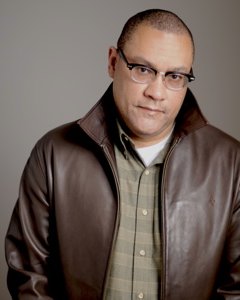
with James Cherry
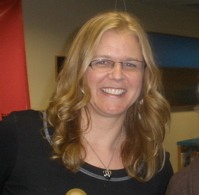
by Kimberly Mathes
Kimberly Mathes: I want to begin with the very beginning of Loose Change.
You precede your own poems with a quote by Octavio Paz: “To read a poem is to
hear it with our eyes; to hear it is to see with our ears.” Why begin with
this quote? With this quote, are you, the author and poet, asking
something of your reader?
James Cherry: Poetry demands that we engage it on the most
visceral of levels. It is not to be encountered as strictly an
intellectual exercise or explored only for its emotional properties.
Instead, it requires an involvement of all of the senses, not only on the part
of the reader, but also on the part of the person who wrote the poem.
This is what I think Paz was getting at and what attracted me to his quote.
When this delicate balance is forged, the poet really becomes secondary and the
poem lives and breathes on its own. Paz’s quote was motivation for me to sharpen
the imagery in the poems where they will be read and re-read for years to come.
KM: What other
poets have motivated you, and in what ways?
JC: Ah . . . the dreaded
influence question. It’s not dreaded because it’s a bad question.
On the contrary. But I dread it because my influences are so eclectic and
I dread that once I start reeling off names, someone is bound to be left off.
But Langston Hughes personifies what a poet should be. He wrote and
travelled. He recognized and identified with the beauty and ugly of black
culture and expressed it in all he did. I’m motivated by the courage of
Pablo Neruda to speak truth to power. I greatly admire Emily Dickinson
and her sense of experimentation. I love the way Whitman loved anything
human. And contemporarily speaking, I’m still trying to catch my breath
from Patricia Smith’s choice of verbs and her ability to create metaphor.
The list is lengthy. But that’s a pretty good start.
KM: That is an incredibly eclectic mix. It
is, perhaps, a dreaded question, I admit, but yours is an unexpected answer,
which is very much like the dedications that you have in your book. You
have poems dedicated to or inspired by everyone from James Brown (Little
Junior) and the contemporary artist Betye Saar (“Hell Fighter”) to Troy Davis (“The
World”) and Bruce Springsteen (“1975”). Is this part of your eclecticism?
Also, you say in your above answer that Langston Hughes “personifies what a
poet should be.” Does a poet need to be eclectic or have an eclectic view
of the world?
JC: Very much so.
My aesthetics are informed by the music of John Coltrane, Beethoven and
Bessie Smith as much as they are influenced by the plays of Eugene O’Neill,
August Wilson and Tennessee Williams. Mailou Jones, Jacob Lawrence and
Diego Rivera are equally as important as Picasso, Monet and Degas.
Although the genres and mediums of expression may differ from each other, I
believe that art is an extension of itself, feeds, nurtures and inspires other
forms of itself. As far as a poet having an eclectic view of the world, I
think the poet would be doing him or herself a disservice to read or study
European or Native American or Chicano poets only. Literature helps us to
understand what it means to be human and to willfully neglect the art and
literature of other cultures makes us less human in a way. But it also
invites stagnation to the creative process. Artists are restless by nature,
always seeking new avenues to self-expression. Picasso’s willingness to
explore African art produced Cubism as part of his growth and development.
KM: So many of
your poems bring attention to both current and historical events that affect
mass numbers of people (like the earthquake in China, slavery in the U.S., and
the impact of the current war). Often, poems that depict these types of devastations are
called “poems of witness,” although Carolyn Forché argues for a different term,
“the social.” In her essay, “Twentieth Century Poetry of Witness,” Forché
states, “The social is a place of resistance and struggle, where books are
published, poems read, and protest disseminated.” Do you agree with this
statement? Do you consider the poet’s job to be one of witnessing?
JC: I agree with Forché’s statement. Poetry is where the news is to be
found today, whether it relates to your community, the nation or the
world. It should owe no debts to the right wing or liberals or
Evangelicals or Atheists. Last I heard, it should bow only at the altar
of Truth and Beauty. This is why poets are so important. Not only do
we preserve and promulgate, but our words can be very prophetic as well.
We have been gifted to provide insight into situations and circumstances that
can become a catalyst for future action or our words can simply serve as a balm
that helps someone make it through the night. As far as witnessing goes, that’s
a term that I first encountered from reading James Baldwin. I think
the nature of witnessing has changed and that’s mainly due to technology.
The world is a lot smaller today thanks to all news networks, Twitter, Facebook,
internet, etc. So, it was easy for me to write a poem about an
earthquake in China because I was so familiar with the minute details of
the horrific event and the grief, even though it was a half world away,
was very personal to me. It amazes me that even though the world is
becoming smaller through technology, we are more alienated each day.
Strange how that works.
KM: When you set out to write your poems on the earthquakes in China (“Afterlife”
and “On Children’s Day”), are you cognizant that you’re setting out to write a
witness poem? Is it that intentional?
JC: Not at all. The
poems that you’re referencing first appeared in Our Common Suffering, an
anthology published in China about the disaster. As I said, I was so
moved by the sense of loss that it resonated with me on a very basic level and
moved me to write the poems. There isn’t anything political about the
poems, but I do think they address and maybe even celebrate how the human
spirit survives and overcomes even in the face of such suffering. This is
universal and it wasn’t difficult for me to put myself in the shoes of a
father whose son was buried beneath the rubble of a collapsed school house.
Poet and literary activist E. Ethelbert Miller asked the same question
about one of the poems in its relationship to witnessing in a recent
speech. So, maybe I was operating on a subconscious level, which happens
a lot with poetry. Maybe not. That doesn’t really concern me.
As long as the poem stays with the reader when he or she finishes it, I’m good.
KM: I would beg to differ and say that there’s a lot at
stake politically when a poet writes with compassion about people who live in
countries whose political ideals oppose our own country’s. It’s like the
poem in your book, “To Be an American,” about the Egyptian man who didn’t
understand the word ‘communism.’ This line, with its gorgeous line break
in the line above says it beautifully as the line stands alone: “upon his
lips. No communism, I say again, slowly.”
Do you
write your poems, or do they write you?
JC: That’s very insightful commentary, Kimberly.
I’ve never been one for worrying about winning the praise or raising the ire of
a government. Ideology and ethnicity are probably the two most shallow
parts of a human being. Below the surface, no matter what corner of the
globe we find ourselves, we all laugh, cry, hunger, thirst, rejoice and mourn
and to recognize that fosters compassion and empathy towards one another and
ultimately the way we interact with one another. When I think of any
country, I think of its people first and how they must navigate their daily
lives. So, depending upon the social conditions of those lives, to show
compassion and identify with their struggles, is indeed a political act.
And can be construed by some to be subversive. As far as my own poetry
goes, I’ve had moments where after a first or second draft, the poem was pretty
much done. In those cases, I was more medium than poet and the words just
flowed through me. That’s the magic of poetry and the writing process.
I still don’t know how it happens exactly and I’ve never heard anyone give an
adequate explanation. But I don’t want to lead anyone astray.
Poetry is hard work. It demands time, study, discipline and
dedication. As with most things, the harder you work at it, the better
you become. So, my answer would be: yes. Some days it’s a
facile process; other days, I struggle like everyone else.
KM: When you say, “When I
think of any country, I think of its people first and how they must navigate
their daily lives,” I thought, “That’s it!” That’s very much what your
poems represent, how people "navigate their daily lives," and that
navigation, no matter how differently it plays out each day for each person on
this earth, is also what ties us together as humans. What I’m wondering
now is about the intersection between the political and the social with the
personal. Your book has poems about family members: your nephew,
your father, your niece. Your book has poems about world events. Is
there a space that divides the personal and the global for you as a poet?
JC: Your question touches
on the concept of poet as witness again. If a poet is a witness and not a
by-stander or spectator, which I believe, then there is no space that divides
the personal and the global. Poets don’t live or create in a vacuum.
In addition to writing about love and death and other matters of personal
angst, it’s just as natural for me to address issues of race, politics, sexism,
war, etc. I’m in the tradition of Langston, Claude McKay, Gwendolyn
Brooks, Sterling Brown, Margaret Walker to name a few. The introduction
of these poets led me to read other black poets such as Etheridge Knight,
Baraka, Nikki Giovanni, Gil-Scot Heron. Without such exposure as a
foundation, I wouldn’t be writing today and these writers created a hunger in
me to explore other writers from diverse ethnic backgrounds. But I don’t
want to duplicate what the poets before me have done or write in the style they
perfected. It’s incumbent upon me to expand the tradition and the way I
do that is to study the craft and to lift my own unique voice on
how living in these times are affecting me personally, culturally and
hopefully in a global sense. Art is a great barometer of what was and is
happening during a particular epoch of history. As with most things,
it’s time that will judge how successful I’ve been.
KM: Many of your poems in this book take on voices of
people other than yourself, other than the poet. Some of these voices are
well known, like Louis Armstrong’s. Many of these voices are very
different than your own. Take, for example, the poem “The Hijab,” in
which the speaker is a Muslim woman. I am most interested in this poem
because the poem itself is about voice:
I hear file drawers shutting,
fingernails on keyboards
and the sound of my own voice
after the phone rings.
The
metaphor of these final four lines is striking–a person surprised to hear her
own voice within a poem that has been written by a man from a different culture
who lives half way across the world, who, in your own words, has such a
different daily life experience than you do. How do you find access to
these disparate voices in your poems, and how did you find access to this one
voice in particular?
JC: I’ve always identified with anyone or any people
struggling for common decency, the right to determine their own destiny and to
be respected as a human being. I love freedom and support anyone else who
loves it. That’s the most basic of God given rights. For me,
there’s no such thing as women rights, or gay rights or civil rights.
They’re all human rights. I guess this sensibility has been shaped and
nurtured in me throughout the years because my history and culture is one of
surviving oppression and overcoming it. I’ve never seen Black folk as the
victim of anything. It wasn’t a stretch for me to write a poem in the
voice of an Arab woman. Far from it. Oppression is the same
everywhere; just different variations here and there. So, it came quite
naturally to write the poem. As an artist, it’s doubtful that I’ll pack
my bags and head out for the nearest revolution taking place somewhere around
the world. Hell, if Hemingway did it, I guess I could too. But it’s
probable that I’ll do what I know to do: raise my voice for
those not in a position to speak for themselves, remind them that they are
not alone. As Ismael Reed would say: “Writin’ is Fightin’.”
KM: I love that quote by
Ishmael Reed! I heard him read once at the Northern Arizona Book
Festival, and his presence and that memory have stayed with me more strongly
than many other poets I’ve been able to hear since then.
So at the end of many poems that address such
disparate topics, you have ten poems on the same subject: Meditations on
middle age (which, in my head, I refer to as the MOMA poems). How did this
short series of ten poems find their way into this book?
JC: The poems were
inspired by Benjamin Saenz’s wonderful book, The Book of What Remains. In that book he has a section
titled, "Meditation on Living in the Desert," and addresses memory,
heritage, politics. Last year, I turned the big 5-0 and thought I’d
use the same approach to reflect on where I’ve been and the things I’ve
experienced in the first 49 years. I saw it as a way of
climbing a mountain, looking over my shoulder at what lies beneath me to
bring those things into sharper definition and detail. So, the ten
poems are held together by a cohesive theme, but the subject matter of
each poem is as disparate as loose change itself.
KM: Speaking of the title,
for a book entitled Loose Change, where the title itself permits a
breadth of topics, how did you decide the order of the poems?
JC: This is something that I always struggle with. I agree that a
book of poems should have an arc and that’s something that I’ll perfect as
I grow and develop as a poet. Matter of fact, my next collection will
deal with Biblical characters and the structure of the book will have to
be a lot tighter. But for this one, the title itself determined
the sequence of the poems. I knew I wanted to start with family and
wanted to end with myself. Everything else in between was closely related
to each other. I was aiming for a book of collected or selected poems
without having it being called as such. That being said, several poems in
the book do reference one another. So while there’s not a formal
structure per se, the title plays on two thematic levels: disparate poems
and the various changes of our lives.
KM: The poem, “When Poetry Is Not Enough,” really stays
with me. The title asserts itself even beyond the content of the poem,
which recounts a compelling narrative in and of itself. Certainly, the
poem and title beg the question, When is poetry not enough, and
when is it not enough even for the poet?
JC: Well, the poem you’re alluding to deals with my time as Artist in
Residence at a high school for troubled teens. I think the program was
successful in getting the kids to express themselves through poetry. But
there was one kid with a lot of potential that I just couldn’t seem to reach.
Poetry, without doubt, is a great medium to gather perspective, definition and
understanding into life’s circumstances and situation, whether personally or
collectively. But sometimes life can be so beautiful or painful that it
becomes ineffable and in those instances, words actually do an injustice to the
situation. I wanted those kids to walk away from that poetry program
understanding that reading and writing poetry can not only change a life, it
can save a life. Some of the kids got the message and have gone on to become
productive in their various walks of life. But in the case of Paul, the
subject of the poem, the call of the streets, was a lot stronger than what I
could offer.
KM: Tell me about “Through
These Doors” and “A Brief History of Field Trips.” Both poems seem to
contain layers of significance created by the subject matter and the
unpredictable line breaks. For
example, the last two stanzas from “Through These Doors” allow the reader to
both scrutinize (the poem’s word) the alternative education system at work (and
thus our education system as whole) while also feel compassion for those who
dwell within it:
who
they can become, is bigger
than
the walls erected around them.
At
3 p.m., they run
out
of our lives
pass
the scrutinizing eye of the security guard
with
a semi-automatic strapped to his hip
and
I wonder
as
I move into the distance, headed home,
will
sundown bring enough food and mercy
to
deliver them upon the dawn.
|
|
JC: Both
poems are part of a trilogy which includes, “When Poetry is Not Enough.”
In “Through These Doors,” I tried to capture the whole Alternative School
experience and provide a sense of how others view teenagers who have often been
labeled “bad” when in essence they are no diffierent from any other American kid.
I found out that they simply want someone to take the time to listen. Let
me add that there were other high schools that I could have taught poetry in,
but I made a conscious decision to be involved with this particular
school. So they wrote and I listened. And then we talked about
elements that go into a poem, read a variety of poets and they wrote some
more. In fact, they wrote enough for me to comprise their work into a
book. There aren’t too many feelings better than seeing your work in
print and that did wonders to elevate self-esteem. Another aspect of the
program was a trip to the National Civil Rights Museum in Memphis, Tennessee.
This was the genesis for “A Brief History of Field Trips.” A lot of the
kids, which were predominantly Black, had never been out of the city’s limits
and walking through those museum doors was an eye opener historically, socially
and culturally. I believe it was a life changing experience for
some. It changed me. And so did the entire program. The
program, sponsored by a grant from the Tennessee Arts Commission, ended in 2010
and was called the “Young Elderz” (the kids possess wisdom beyond their years).
Perry Burrows was the Language Arts instructor during that time and
remains a good friend today.
KM: How did
you decide on a trilogy of poems for writing about these experiences?
JC: There are other poems about the
Alternative School years and I may develop into a chapbook or a collection
of poems even. But I thought these three [were] representative of
the overall experience. One deals with a kid individually, another with
the kids collectively and the final one a road trip, which was another
component of the program. But your question goes beyond why I decided
upon a trilogy of poems and gets at the heart of why we write poetry in
general. Poetry is about the moment, lives in the moment, captures and
celebrates the moment. And by doing so becomes eternal. No matter
how many times we read a poem or no matter how long ago it was written, it’s
always new.
KM: In this collection, Loose
Change, were there poems that were more difficult to write than others?
JC: This
collection represents the most personal poems I’ve written thus far. So,
naturally the poems dealing with the death of family members were the most
difficult to write. In the book there are poems that deal with the loss
of a nephew, a mother and father. Writing about the death of loved ones
or those close to you is an interesting proposition. In some cases, a
poem can be penned in days or weeks; in other instances it takes months or even
years to even get a couple of lines down. Anyway, I felt that the writing
of the poems were necessary and anytime something is necessary it’s generally
not an easy process.
KM: You say, “anytime something
is necessary it’s generally not an easy process;” can you talk a little about
your process? How often do you write poetry? You’re also a prose
writer and have a novel (Shadow of Light, Serpent’s Tail Press,
2008) and a book of short stories published (Still a Man and Other
Stories, Aquarius Press, 2011). How do you decide when to
work in different genre? Is it a matter of discipline? A matter of
the muse?
JC: Well, my process of writing both
prose and poetry has evolved as I have evolved as a writer. Years ago, I’d
scribble poems on the back of napkins, carry out menus, post-its etc. And
occasionally today, I still do that. But mostly, when it comes to poetry,
if something catches my eye or ear as I move through the world, I’ll jot
down a few ideas about it in a notepad and flesh it out a few days later.
For example, I have several notes on the recent George Zimmerman acquittal
and those poems are smoldering in my bones right now and if I don’t write them
soon, I’ll explode from anger, fear and sadness. As far as my fiction
goes, I’m a licensed health care professional by day and the prose works
better in the evening hours and the later the better. It’s either that or
early morning weekend hours, which makes for productive writing as well.
My fiction starts with an image and I develop a loose outline from there.
This, I think, is what allows me to be comfortable in both genres because
imagery is very important to me in the writing poetry. As far
as how I decide which genre to work in, I don’t know if I’d credit either
discipline or muse. I think it’s a very intuitive thing. As an
artist, you just know what you know. And I also know that it’s a never-ending
process. I have more ideas for poems, short stories, novels, screenplays
and non-fiction projects than I’ll ever have the time to write.
KM: Poetry and jazz. So often this
relationship is framed looking backward with Langston Hughes as the primary
example. What is poetry and jazz today?
JC: Not only jazz, but Hughes was also greatly
influenced by the blues as well. At the time Hughes was finding his voice
during the period of the Harlem Renaissance, Louis Armstrong was
revolutionizing jazz by introducing the solo during a jazz ensemble
performance. And I think improvisation is the common denominator for both
poetry and jazz. There is freedom in jazz and poetry, but that also
means responsibility. Jazz musicians are free to express themselves
anyway they want as long as they stay within the context of the song and are
willing to listen to their band mates and afford them the same courtesy;
it’s a great exercise in democracy. With poets, every poem is a
solo, but we must be cognizant of tradition while reaching for something
new. And the only way to do that is to know the tools of the trade:
enjambment, caesura, anaphora, sonnet, sestina, white space, etc., even if
we don’t use them. I believe content is important, but form equally so.
A lot of jazz musicians, Mingus and Miles come readily to mind, were Julliard
trained musicians. Not only did they know how to play, they knew how to
compose as well. So for me, whenever I writing prose or poetry,
‘Trane, Bird, Billie Holliday, Max Roach, Diz, Ella are always in the room.
KM: That’s a beautiful
response, and I think to end our interview there — on what is open
and possible because of those who’ve come before and also because of what lies
ahead.
JC: It was a pleasure. Thanks, Kimberly.