These poems are selected from Bronwyn Lea’s Flight Animals (UQP, 2001). You can order Flight Animals online from the University of Queensland Bookshop
________
For more poetry from Australia
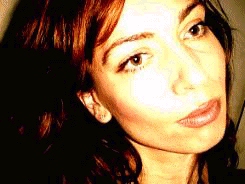 Bronwyn Lea
Antipodes
In this lifetime antipodes must be
my word, my home or anyone else’s.
Anyone who lives at opposites or knows
what it is to be contrary, to deviate. Like
disparate continents. Like the holding of
Europe and Australia in your blood.
This, I find, is a feat. And I recognize as I age
that my apogees are elongating,
my reversals are rising like the swollen
belly of a frog storing water in its sleep.
My friend feels it too and wonders
if she can ever love down to the lonely
and beyond; beyond that rocky, existential
space that women like us, so schooled
in ricochet, retreat from with the
swiftness of a silver-capped bullet.
There is a man I know with sand-heavy
eyes that are sometimes sullen blue
like the haze of the eucalypt grove
that makes you remember all the f-words
you never use like forgiven and forever.
He has grown on me like an embryo
until without him I feel thrown
into being incomplete like the wintering
rose bush de-leafed and out of bloom,
like the falling apart mountain,
a mountain that all my tying together
won’t mend. Then just now, lying
in the low light of afternoon, I saw
it is the movement more than the man
that I love; the movement in and out
of me, framing the sweet falling
of lilac pollen, falling soft upon his back,
my tongue.
Catalogue of People
There are—
those who write literature of praise and those who write
literature of blame. Both reveal an impulse towards life.
those who see the cup half full and those who see it half
empty. Neither dare drink.
those who like to sit by oceans and those who like to sit
by lakes. Both admire water birds.
those who fear intimacy and those who fear abandonment.
Rehabilitation, for both types, is lengthy.
those who see life as suffering and those who see life as worth
suffering for. Rarely is either type native to the tropics.
those whose 2nd toe is shorter than their big toe and those
whose 2nd toe is longer. 9 times out of 10, athletes
are made from the first camp.
those who like Wordsworth and those who prefer Coleridge.
Both are predisposed to owning cats.
those who like Tolstoy and those who prefer Dostoyevski.
Usually these people are similar in temperament to the people
who like Wordsworth or Coleridge respectively but are more
widely read.
those who bring strawberries and those who bring blueprints.
Both types are equally likely to be female.
those who believe in chance and those who believe in fate.
Nobody knows how anyone got this way.
those who can roll the edges of their tongue and those who
cannot. Both enjoy kissing.
those who believe god lives and those who believe god is
dead. Both believe.
those who do not eat animals for reasons of health and
those who do not eat animals for reasons of compassion.
Neither hunger.
those who’d make professional mourners and those who’d
make professional celebrants. Both professions fill a need.
those who say they are afraid of intimacy but are really afraid
of abandonment and those who say they are afraid of
abandonment but are really afraid of intimacy. Hope is held
for a cure.
those who blame their misery on big government and those
who blame it on big business. Both have bad table manners.
those who read the book and those who wait for the movie.
These types are likely to intermarry.
those who refuse to apologise and those who apologise too
readily. Neither party understands forgiveness.
those who speculate about two types of people and those who
speculate about continuums. The latter are caged in a paradox.
those who talk to the gods with their feet and those who talk
to the gods with their heads. The former have better rhythm.
those who are turned on by cutting edge technology and those
who warm to it only once it’s obsolete. Often the latter exhibits
great affection for electronic typewriters and vinyl records.
those who are afraid of prairies and those who are afraid of
the insides of elevators. Both delight in cut flowers.
those who write poetry and those who write about poetry.
Both are susceptible to untruths.
those who give to beggars and those who do not. Religion is
rarely a factor.
those who fight for the individual and those who fight for
society. Both are abstract thinkers.
those who like pigeons and those who do not. I like pigeons.
Contemplating Chaos at Burleigh Heads
My daughter skips
a jellyfish across the flats. She is collecting
pippies in a bucket and wears wet flowers
in her hair. It occurs to me
that my entire reality is reduced to ideas
of trees, stones and animals. That
the daughter I see ordinarily
is only the representation of an abstraction: a category
of sex, a name, a description, a series
of events—
the flowers in her hair
are not flowers. They are drowned butterflies
that have washed up with the jellyfish
along the shore—
and for that matter,
am I not an abstraction to myself? Gesturing
at the funnels and rolls of my emotions
with words like fear, joy, or grief. The grief
that comes when I confront my enormous uncertainty
about who this child is.
She crouches
at the water’s edge watching the waves
wash over her feet. If I could bend
a thread around the craggy line
of her body, trace her bays
and indentations, the slender peninsulas
of her fingers and toes, trace every drift
and ripple down to the twists and turns
of her molecules, the coastline
of her body would be infinite. And
because her body constantly erodes and renews
it would be an infinity that constantly
changes.
Soft snores float
from her bedroom. I stop writing
and walk outside. A smell of humus,
flash of silky oaks, the shadow of a possum crashes
along the gutter. Soon it will rain.
Yesterday,
driving home from the beach,
I studied her in glances as she slept.
Each view varied so that—how do I say this?—
I saw first one child,
then another and another like a shuffling
of snapshots. But after some time,
I discovered a child that exists
between a possibility of several children.
I reached over
and touched that child’s cheek: it was hot and red
and dented beneath my fingers.
It begins to rain.
When I return to my desk,
she will bring me the pippies in her bucket. A spray
of sand will cling to her feet and ankles,
her every step towards me eroding the surface
of her skin, leaving remnants of her
cells among the sand’s fragments of shells
and corals.
Christmas Day
Cuzco, Peru
Even the bells of San Blas cannot wake him.
Nor the smell of gunpowder that lifts
from the streets with the rain. Nor Camilla’s crying
at dawn, Feliz Navidad! Nor my breasts
as they press into his back. He is sound asleep,
and I am practicing detachment. His neck
is scarlet, sunburnt from yesterday’s siesta
in the Plaza de Armas, and already his skin
is starting to shed, to roll at the edges
like the pages of an old book. Underneath,
he is brand new. I take a piece of skin
and carefully peel it down his neck. It detaches
in the shape of a parabola—billows
like a little sail—and tears abruptly at the tip.
I hold up my relic to the light: it is clear
like cellophane and dries to a cloudy white. I
am wanting my caballista, but he is not in his skin:
it is only his wrapping! He must be underneath. I
peel faster. I want to uncover him. He
is my Christmas present. I want to open
him. I shake him. I want to hear what’s inside. I
roll him over and peel back his eyes.
