
More translations from Nepal
________
Wayne’s photos and poems in this issue
________
Email ________
EmailWayne
________
Some of these poems previously were published:
“The Hunger For Justice And The Water Of
Desperation” and “A Strange Temple”in Manoa, “Days In The
Life” in Spoon River Poetry Review, “Maria, I Am Always With You” in Collages & Bricollages, “If” in The Minnesota Review, and all the other poems in TWO SISTERS: the poems of Benju
Sharma and Manju Kanchuli.

By Manju Kanchuli
Manju Kanchuli is the author of the short story collections Some Love, Some Differences and Stories by Kanchuli and the poetry collections My Life My World and Inside and Outside Eyelids. She is the co-translator with Wayne Amtzis of Two Sisters: the Poetry of Benju Sharma & Manju Kanchuli. Her work can also be found online at Suskera, Pilgrim’s Books, and spinybabbler
The poetry of Manju Kanchuli addresses the absent other. The voice behind many of the poems translated here initiates dialogue while affirming an interior awareness. It is from an inner vantage that these poems arise, and the authority gained there allows the author to speak not only to her self, but to the absent other, be it a man (“Picture Of A Lost Man”), a woman (“I Am Always With You”) or the world at large (“Waiting For The Millennium”). In language that reconciles feeling and consciousness, Manju Kanchuli presents herself as a woman whose independence is affirmed on the basis of her creative enterprise. In some of her more explicit poems Kanchuli realizes how marked she is by the age, her culture and society, and most readily by the hands of men who make use of privilege—husbands, priests, politicians. “In Days In The Life” and in “The Hunger For Justice And The Waters Of Desperation” she depicts clearly (and from within) the constraints on a married woman in her culture; in “A Strange Temple” her idiosyncratic imagery and interior dialogue characterize her society’s hypocrisy and closed-mindedness. In these and in all of her poems, Manju Kanchuli’s predominant vision is one that offers forbearance to her oppressors, solidarity to other woman and consolation to herself (and her readers) through the restorative powers of language.
The Hunger For Justice And The Water Of Desperation
After preparing a feast
satisfying the entire family
like a highly skilled housewife
satisfying herself
she licks the empty cauldron and pan
or swallows the slightly burnt leavings
And then hungry and weepy-eyed this rainy night
falls asleep. Not without fulfilling you in your bed room
She’s been spending her days licking the salty grit
on the empty pan provided by legislation
No justice has come to ask—“Have you eaten?”
It’s not just this century-long night
she has slept without food
There were many nights like that
Today too there’s a feast at her house
Tell them: In her name
don’t put out the rice the meal requires
She doesn’t need feasts like these
For amid great feasts, she already has
the habit of fasting herself to sleep
Fire rages on the riverbank. With a flood of water
she has blanketed that terrible inferno of hunger
She has doused the blaze sufficiently
with the unfathomable depths
of a single desperation
A Strange Temple
The idol behind the shut door of god must be
arrayed with vermilion and rice
That I don’t know
Before meeting the deity I’ve seen
nothing but naked figures on the struts above
I’ve read so many times
“Behind the locked temple door there’s no god at all”
A long time has passed…these days
I haven’t opened that temple door with flowers of hope
Its inner wall might have transformed into a mirror,
blossoming in the mirror the priest’s aroused mind
might have bulged forth with a flood,
the mirror on the torso turned towards his mind
might have melted with immense shame
That I don’t know
Out of shame I haven’t till now
parted that mirror’s curtain
Encountering yellow sunlight everywhere
the priest’s robe of black clouds might tremble
Tangled in the loincloth of a hurricane
it might be hovering above some gorge somewhere
That I don’t know
I haven’t forced that cloud to land
in the theater of the earth
I haven’t harassed it with bright sunlight
History, upon a wall of mud, has been written with lines
in the vacuum of space, with voices
over the forehead of earth, with blood
in the ink of the heart, with red
into the pen of the human, with a cry;
beneath the layered soil of earth, with bones
into layers of sedimentary rock, with coral
inside black coal, with illuminating diamond
But I’ve never understood
the meaning of the blank paper smeared with spider shit
in the piled garbage bin near the temple
An old wall might have been changed into a new mirror
that new mirror crawled upon by a snail
into parchment of fresh slime
That I don’t know
I’ve taken those walls, mirrors, and blank sheets
to be your undergarments
and have never in front of anyone else
parted them till today
I haven’t opened the temple door
I haven’t disrobed the priest The image inside the closed door of god
must still be arrayed with vermilion and rice
That I don’t know
Before meeting the deity
I’ve seen nothing but naked figures on the struts above
Days In The Life
Either, from stained clothes
I would scrub the dirt of superstition
as I stayed home, or
I’d put to be pitched into the drain
full on the plate
the discardings of pro and con
In that way scrubbing my own environs clean
Either, I’d play with saffron yellow
salt & sugar white, and vegetable green in the kitchen,
dipping my fingers to the art of that experiment
or with sweat—sharp needle
stitch fraying divides
so as just to..
strengthen the relationship
To make our house beautiful,
with my hands my rhododendron palms
I’d scrub it clean every evening
There, with a rainbow bearing brush
I’d paint the limited sky of Mt Everest
above my own
Everyday, I would be
busy somewhere — in the library,
somewhere — in the laboratory,
somewhere — with only unlined paper and pen,
somewhere — in the educational institution,
there, with the mission of adding bricks
layer by layer to that basic foundation
In our room every evening I’d switch on a light
drawn from the clear Himalayan streams
electric light of unplanted crops
in the plains and terraces On such an evening,
like a swallow, though flying everywhere,
to my own small nest I would return
drawn by thoughts of my fledglings
I Am Always With You
A flower conceals itself in the bud
And yet to enter a world where many and various
are thieving hands
Maria, I am always with you
As warily or in packs
phantoms flit over the lips of school kids
for the shapes they seek, Maria, with innocent face
in a hammock slung cross your room
I’ll be soundly sleeping
Maria, I am always with you
When and where for your sake and mine
liberty’s orations ring out in chorus,
in brothel bed, lips —by lips smothered,
before ours part to speak, lips
close tight. By those very hands raised for you and me
I’m extracted like honeycomb
By the very hands which beckon
I’m barred from the path
By their feet dancing beside me
I’m repeatedly tripped
By the hand that shakes mine I’m struck
When in far-flung defiles morals are preached,
dark night standing as the house of religion,
by their priestly hands in nightmare
unbearably we’re slowly drawn and clutched
When these lascivious dons
send underlings to recruit us as call girls,
wide-eyed in the classroom chair
I read their morals spelled out on the blackboard
Maria I am always with you
For you, with words I thunder,
with action I growl, and with tears I rush
because for your sake words
are for bullets; plans are for action,
the rest, only speechless overflowing voice
Maria, this time for you, instead of flowers,
I offer a gift of stone. Please, secure it in your heart
Whenever gunned down
by relationships, fortune, values, and the law,
to produce valence,
channel the current through stone!
Whenever with one finger, man strokes
and with another finger, scratches
the minds of other men, or sitting alone in an office
licks blood with another of his fingers,
Maria, with you in blood throes
With the force of an 80 kilo paperweight
in their offices I’m pressed down,
oppressed in body and heart
Within their house and walls by their restricting
fingers like barbed wire fences
I’m surrounded. Wrenched by iron-pronged hands
You know this well —
After they’ve had their fill with breasts and thighs,
they pick their teeth with a toothpick
Butter irritates the cactus;
fearfully they flee
But chancing it one day parting their caterpillar lips,
they gulp lumps of butter
When it doesn’t digest,
Maria, flushed inside their stomachs
I ache churning inside them
Maria I am always with you
There are buds yet to sprout within me, Maria!
But the more I
want with you to open in the garden,
the more I’m nipped
Maria, inside camps of molestation,
stretched out on tyranny’s cutting board,
pieces of torn flesh tremble
With the eyes of a fish slapped onto the riverbank,
weighed-out and bargained for on the scale,
in the marketplace of village and town
I’m watching…
Maria, I am always with you
in the prison cell gasping for breath I flounder
Maria, I am always with you
Always with you
If
Had I not stumbled,
I would have fallen
If that small mistake
had not been made,
how mistaken
my life would have been
To fathom my heart’s depths,
how often
I would have been misled
by the heartbeat of faraway
Had I not been
swept aside by a rivulet,
the rising tide
would have drawn me under
If I hadn’t been
grazed by the paws of a cat,
I would have fallen
into the mouth of a tiger
If I hadn’t stumbled
in the base camp itself,
I would have plummetted
from 29,000 feet
If I hadn’t stumbled,
a mishap would have marked me
forever
If a small mistake
had not been made,
how wrong
my life would have been
The Way Of A River, The Forest, Night
I did not forge that river
whose current drags the living down
and tosses a carcass to its banks
I only wet my feet—that for a few days
became lifeless. The river was not the stable still
continuous flow I thought it to be
I could not cross that river
I never tread that path
where my tiny range-bound hands
were fated to be brushed by the beast;
its solitude devoured
by the leopard’s clawing paws
I cleared that forest with my gaze
Thinking it useless to render it so,
my eyes turned back immediately
The forest was not blessed
with the security, solitude and pleasure
I thought there to be
I could not pass through that forest
Not again did I step through to brigand night
whose tusk now gnaws the moon
having devoured the sun. Only a morning,
naively, reached day and it
blanched with night—its whole body so soon
took on the darkest hues
Night was not the cove—warm, impregnated
with mild dream—I thought it to be
I could not immerse myself in the black liquids of that night
The Picture Of A Lost Man
You were growing quickly and continuously
spreading green hands and feet over the walnut tree
but with scent above your bloom has been lost
Climbing you were onto the high terraces,
into water rippling, over the vines of the wall
The pinnacle, the terraces lead to, the bank
the ripple leads to, and the hilltop the wall leads to
Suddenly how they have disappeared!
Flowing you were the speed of the Yangtze and Volga
Your own roaring voice blanketing stone and sand
Concealed by a hill
I asked you so many times from afar,
then setting foot on the path — “Where are you going?”
Branded by the fear of delay,
not with words, but with momentum
you responded, forcefully
without speech without action
hurrying. Your river waters ran with hurricane velocity
With patience I saw your goal
Under the branches the wind went on blowing
the long hair of the leaves
Like a bubble of water in its midst
the river evaporated. How your sea was lost!
While meeting, with only a hermit’s dim eyes
did you respond. Eyes spoke, you didn’t
“The river could not reach the sea, the sea was lost in the river”
In your oxygen-less trajectory a rocket reached the heights
Resting my chin with logic on my finger,
looking upwards to your reinvention,
I was too frightened to ask you
Your velocity ascended with smoke,
you halted in space. How your ether was lost in its midst
When we met, your statue-body responded,
your whole body spoke, you didn’t —
“The rocket couldn’t reach space, space was lost in the rocket.”
The hand and the knife that you raised;
how they were lost in emotion
In restlessness, flowing river flowing, tinfoil mind
itself lost in another reality in a tiny ladle brimming with water
Neither was concern made clear as by an intimate friend
nor revealed in the beloved’s utterance
I put forth the bar of restriction with my forefinger
Above sea and earth your thinking was lost
in calculating the effects of chemical weapons
How many times I prayed —
“Step sure with feelings and sympathy,
climb to wisdom and tolerance,
attain logic and reality”
and all those weapons you created were after all
lost in destruction
As we met, your broken wall-like features responded
the features of a man spoke, you didn’t —
“The plan couldn’t come to fruition, the plan was lost in the planning”
The hunger of the ruthless tiger whose teeth have fallen out
lost behind the zoo’s iron bars in hide-bound skin ….
I have become distraught
Over the breast of my dim evening
as if claiming property I collected your features
An entire sketch enriched in oil color by color
Searching the picture for your lost self
in city, family, and gatherings
you panicked like a hungry ghost
The Wall collapsed. The Statue fell down
Chemical factories were destroyed
Bridges were made. It was then I met you again
On that day my morning collided with your evening
Facing the light you had to drape yourself
with a blanket of shadow. I couldn’t,
ask to the numbed evening “Where are you going?”
Steps withdrew, mind didn’t; the heart with its lips spoke,
I didn’t. Within a packet of silver paper
I kept concealed the oil sketch of your compulsions
Though I met you several times
I couldn’t reveal it to you
I Have Nothing To Do With You Now
I superficially feel happiness and sorrow
Bare feet tread on grassy soil —not rock nor sand
steadily… Worldly affairs have no sting,
and the sea is peaceful
There is no desire, no determination; no vacillation
By singing the song of life throughout life
I am free of song
Above all there is no lyrical passion
and as the years pass
intense passion, greed, and infatuation lose hold
Nowhere is vision blurred
Conduct, analysis, and decision are distilled
as with a sweet coolness in still water
No grit kicked up anywhere
my mind floats like a kite in the sky,
like petals on water
I emancipate myself from you
There’s no detestation no attraction
That’s why I’m cool and calm
Within this flow there is no yearning
no determination. That’s why I’m free from bondage
I am finally free from the cage of your scheming
Ever satisfied. I have no desire for the succor
that needs the shelter of your heart
No obsessive feeling; infatuation traceless
No thirst for life nor determination to end it
I am content. Without constraint.
Nothing takes hold. There is no coming or going
Nor concern for achievement
I’ve experienced much in little, and in its brevity
that’s sufficient. No desire for worldly pleasure
Nor anxiety envy joy. I am achieving and abandoning you
By my gaze I reach you from afar
I am distancing myself. Not lust but liberation
No happiness, nor sorrow in not being near
In these present circumstances
I am not unawake. Dream has no attraction
I experience a strange respite.
No catastrophe or qualms or anything to detest
There’s nothing I can say “mine” to
Purified I yearn not for distraction
No festivity. No ebb and flow — no tide
no mud no dust. No anxiety of non-fulfillment
No initiative to achieve nor discard
Nothing compels. Melancholy and serene,
within all situations, I am far from these feelings
There might be somewhere some intent
in speaking of “the salve of words”
or for uttering “wounded by gunshot”.
But not here in renunciation
No one need wish me joy and peace
Simply…now…
I have nothing more to say
Waiting For the Next Century
My universe lacks this century
This century is yours
For those who have hands,
those who don’t…
for the four-footed,
those who don’t have feet…
for the higher animals,
the lower creatures…
have become food
One life for the sake of
another’s survival
Everyone for all
in a death obsessed land
For the consumer
has become a commodity
It’s your century lying in a serpent’s mouth
Who will save it?
Ocean and sky unassailably free
lie empty and vacant within river banks
What form of emancipation
will descend to earth?
From the hand of pollution,
from lust — the humus of anger
When will we be done with these skirmishes!
Till then
your century is tottering
It’s a momentary stability without support
Who will hold and sustain it?
Who with serene intentions
will join your land to the all encompassing sky?
Small cottages destroyed by fire
Here and there encampments meditating
Memorable heaps of ash!
Into the carcasses of youth
felled like posts
who will commence sowing life-force
Who will conceive today’s Buddha
from the child of a fabricated father,
and from another envisioning,
today’s Gandhi!
With the left hand raised for construction,
how the other is demolished
Civilization’s debris spread over the earth’s surface
Oh! though they have Gandhi’s fingers and Buddha’s palms,
the tiny arteries within and splinters of bone
destroyed
with the acrimonies of civilization
Time is made of events
Who’ll lay foundation bricks for reconstruction
of this your age?
In silence
hands in splinters
in creation
destroyed
covered with soil
like skulls
chance unearthed
in Mohanjodaro and Harappa
Their antecedence, not easily erased,
engraved by your chemistry’s evidence
How once orchards
flourished within the capitals of those lands
How once battle raised itself
upon the sovereignty of those lands!
To uncover this,
your century cries out for the excavation of another UN
Thus the world turns towards reconciliation
Gunfire’s killing and revenge
realized as worthless and useless
Upon the waters, separate and apart,
how the hard land,
almost real,
begins to float like boats
In human relationships, at last, your century
Again,
midst of overwhelming reconciliation,
minor skirmishes commence
Wherever my broken hands lie,
there as well
your broken legs lie
Minor acrimonies like bursts of firecrackers
Again the ravaged air asks for liberty
Now man wants to live together, and not by ideology,
It’s the same day of the same century
Oh, how could it be long!
It’s the same time
Oh, how could it be far away!
It’s the same injured aspiration
Oh how could it be different!
There is only one life to live
Oh how could it be more!
I heard the sound of a coming
—somewhere—
rainbows, in sight; seedpod fur,
to the touch; shower of roses, in fragrance;
the chorus of three timbres overflowed,
the soft fur of a seed pod
reverberated in a stubble of stone,
your own Paleolithic nail
scratched the butter of its fur
A shower of roses
heaped a mile high pile of stench
The confluence of the centuries diverged
How can this century die so easily
always waiting for the next
Lightning startles, thunderbolts frightens
Under subjugation of terror, nowhere does anyone speak
The leaves of orange tree tremble
As do chandeliers in visitors rooms,
antennae on roofs, bricks of walls,
cloud clusters above houses
wondering on which side the tremor shook!
Though the wick withers under its own shadow,
how can a moment of immense light
die so readily?
As if it were so easy to extinguish
As if were an accident
— a death
that was contracted for
Wick, light of peace, unabated wick, light of a river overflowing
light of the solar world over the pillow at the head of the bed
light of immense dedication, light of struggle, protected from time immemorial
undivided wick — light of the time that will come!
Fire
Translated by Wayne Amtzis with Manju Kanchuli
I do so love warmth. My body, tempted by companionship with heat coming forth from the fire, contracts recollecting the cold. Drawn by the intensity of the flames, my flesh first feels heat from afar. A species of warmth ripples along a tangle of nerves tingling the skin of the brain, registering this state throughout my body and its organs. How happy I am then, smiling within. The tincture of my smile (that spoken of by the lips of the heart) is reflected in the lips that you see. Enlivened and young again with the water of deep happiness. Such expressiveness cannot be concealed. A friend walking at my side notices this change — “Why are you so happy?” Despite this expression of my own presence, my feelings cannot find the words to give voice to themselves. Whatever I say would be meager and incomplete, or so I think. I hasten past him in the clutch of that warmth. At first I saw only the light of the fire. The black of charcoal, its remains, or the darkness of the smoke, its consequence, were hidden from me. For they are not the fire’s essence, its warmth, and are only related to it. Though my inquiry would soon turn towards the smoke and blackening of the burning log (the charcoal), I pay them no heed. The center that draws me is the fire’s warmth. I don’t make much of ash because it is the remains, and the maturity and adulthood that foresees the remains, that foretells it, is not developed in me. A man sits before the fire tending it. From a distance with deep affection and cordiality he welcomes me, he calls me, gesturing with his fingers. Between the place where I walk and that of the fire’s heat a long distance remains. My feet spring forward. They hasten. Walking like this they soon reach the fire’s enclave, allowing me to confront the fire precisely where I happen to stand at the culmination of that procession, without embarrassment, explicitly. How vehemently it burns. For some time I find myself haloed before the blaze. I persistently try to observe myself in that light. For some time I find myself pleased, relaxed, enlivened, and warm. The man tending the fire, who knows me well, says: “Please, come closer, sit. Beside me.” With these words I move without hesitation or thought. The feeling of warmth intensifies; my mind takes pleasure in it. For warmth has its own music with a melody sufficient to itself, expressive of the intensity of heat. My aim to realize such warmth moves me towards him—to be at his feet where his physicality, his human form configures. Otherwise how could I have taken in the fire’s warmth at that time. I would have only been touched from afar by the heat. I happen to remember the saying: “A dog struck by an ember fears the light from a bulb.” Within that remembering, that foretelling, there comes a time when a child crawls directly and unwittingly towards the fire. With his hand he tries to grasp the light he sees with his eyes. He doesn’t draw the line that demarcates danger — of fire burning — in his brain. A distant voice reacts for him: “Oh, no, it will burn you. No!” With the sudden intervention of that voice his hand stops in mid-air. He saw only the fire’s light; not the element that burns. Thus the underlying force of his interest draws him on. A few rapid steps and he reaches it after all. With sudden pain and agony there are tears, and in the midst of that fear and ignorance in a loud voice he screams. In that incident I see embodied that which I had already experienced. Detached, within my own mind, within the abstraction of thought, I tell myself: it is only through experience that a child learns of the pain of fire. Taking this in, I am a child again. I feel the burn, I feel myself burning, and in that memory I crawl forth reaching out for some object of warmth. In my mind, then, and now, in its youthfulness, moving towards the fire, I hear that familial and societal voice – “Oh No! No! It will burn you. Don’t go.” The child’s screams resounds with the voice of my former self. I remember —that as I moved towards the fire, there was no one to save me from the burning flames. No one to catch hold of me and pull me aside. I look into the burnt hands and feet of that child and I find my disfigured self in it. As if suffering from hysteria, I cry out. Perhaps, and yet, since I am now grown, it was but my first whimper in which such woeful sounds were heard. That burning fire burns me from afar, burns without my being touched by flames. In what way could a torrent of uncontrolled tears extinguish the burning embers of that log? It was more like adding ghee to the fire — the flames flare more fiercely. He stands beside me, he stares. I whimper. I cannot hold it back. As I run home it spills forth like a volcano. I tell my parents who were out walking in the garden what happened. In this way my hands were burned in childhood. I extend my helpless, innocent, fingerless hands before them and ask through my tears “How were my hands burned? Why do you never tell me what happened?” My mother says, in the voice of anger and depression “Fire burns, don’t you realize that?” My father, with the same voice, but in a serious tone. “Dearest child, one should know how to use the heat of fire! The fire will warm you. But fire burns, it can burn anyone. You were a small child when you were burned by fire.” Nowadays I often place those fire-burned disfigured hands before me and heat them only with the warmth emanating from the heater in the room. How often I measure with my eyes the current and the heat of the heater’s subdued flames.
Introduction by
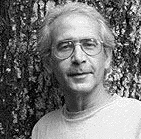 Wayne Amtzis
Translations by Wayne Amtzis with the author
