More translations in our
Winter 2002
Fall 2001
Summer 2001
Spring 2001
Summer Issue 2000
Fall Issue 2000
Winter 2000
Spring 2000
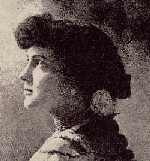 Delmira Agustini was born into a wealthy Uruguayan family, in Montevideo, on October 24, 1886. As others of her social class, she was educated at home and (in addition to the traditional subjects) studied French, literature, piano, and painting. She published her first poems in 1902 (at sixteen) in La Alborada, a prominent literary journal in Montevideo. Soon after, under the pseudonym “Joujou,” she published biographical sketches of women “of arts and letters” for the same magazine. Her first book of poems, El libro blanco (The White Book) was published in 1907 and her second, Cantos de la mañana (Morning Songs) in 1910. By this time, she had acquired considerable local and national prestige. She became friends with a number of prominent Latin American writers, either through correspondence or during their visits to Montevideo, a thriving cultural and literary center of the times. Her work lies firmly in the tradition of Latin American modernismo (influenced by French symbolism) and its chief practitioner, Nicaragua’s Ruben Darío, was a friend and advocate. In February of 1913, Agustini published her final volume, Las Calices Vacios, (The Empty Chalices). In August of 1913, she married Enrique Job Reyes. She returned home a few weeks after and a divorce decree was issued in November of the same year. Even so, the couple continued a clandestine relationship. On June 22, 1914, about seven months later, Job Reyes murdered Delmira Agustini, and then killed himself. She was 27 years old.
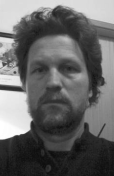 Johannes Beilharz
writes in German and English,
paints and translates. He is the founder and editor
of an international literature and art forum on the
Internet http://www.geocities.com/johbeil/ and a
literature editor for Open Directory Project (dmoz.org). He lives in Vöhringen, Germany.
Johannes Beilharz
writes in German and English,
paints and translates. He is the founder and editor
of an international literature and art forum on the
Internet http://www.geocities.com/johbeil/ and a
literature editor for Open Directory Project (dmoz.org). He lives in Vöhringen, Germany.
 Sean Chapman
received a Master’s degree from the writing program at Southern
Illinois University at Carbondale and an MFA from the University of Arkansas
at Fayetteville and has published poems in Aethlon, The Distillery,
Louisiana Literature, Zone 3, Laurel Review, Water~Stone and elsewhere. This
is his first translation publication.
Sean Chapman
received a Master’s degree from the writing program at Southern
Illinois University at Carbondale and an MFA from the University of Arkansas
at Fayetteville and has published poems in Aethlon, The Distillery,
Louisiana Literature, Zone 3, Laurel Review, Water~Stone and elsewhere. This
is his first translation publication.
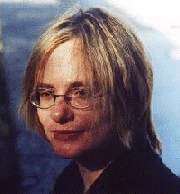 Sharron Hass
(b.1966 Israel) has studied and taught classics at Tel Aviv University. One of the founders of a writing program for gifted adolescents, she has represented Israel at poetry festivals in Rotterdam and Macedonia. Her first book appeared in 1997; her second, The Stranger and the Everyday Woman, this winter.
Sharron Hass
(b.1966 Israel) has studied and taught classics at Tel Aviv University. One of the founders of a writing program for gifted adolescents, she has represented Israel at poetry festivals in Rotterdam and Macedonia. Her first book appeared in 1997; her second, The Stranger and the Everyday Woman, this winter.
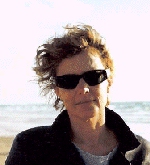 Lisa Katz
completed her dissertation on Sylvia Plath last year for the Hebrew University of Jerusalem, where she teaches. Her poetry currently appears in Leviathan Quarterly (England) issues 2 & 3, and The Reading Room 3 (New York City); her translations from the Hebrew have appeared in The New Yorker, Jubilat and many other magazines. Some poems from the “Breast Art” series have appeared in Nimrod, Rhino, and Inkwell. In this issue, she is represented by her electronic chapbook, Breast Art, and by her translations from the Hebrew of Agi Mishol, Admiel Kosman, Sharron Hass, and Rami Saari.
Lisa Katz
completed her dissertation on Sylvia Plath last year for the Hebrew University of Jerusalem, where she teaches. Her poetry currently appears in Leviathan Quarterly (England) issues 2 & 3, and The Reading Room 3 (New York City); her translations from the Hebrew have appeared in The New Yorker, Jubilat and many other magazines. Some poems from the “Breast Art” series have appeared in Nimrod, Rhino, and Inkwell. In this issue, she is represented by her electronic chapbook, Breast Art, and by her translations from the Hebrew of Agi Mishol, Admiel Kosman, Sharron Hass, and Rami Saari.
 Admiel Kosman
(b. 1957 Israel ) is professor of Talmud at Bar Ilan University, the author of five books of poetry (most recently We Have Reached God and A New Commentary, with God’s Help ) and a newspaper columnist . His column, a post-modern view of midrash, appears in the Friday edition of Israel’s leading newspaper, whose English version may be found at: www.haaaretzdaily.com
Admiel Kosman
(b. 1957 Israel ) is professor of Talmud at Bar Ilan University, the author of five books of poetry (most recently We Have Reached God and A New Commentary, with God’s Help ) and a newspaper columnist . His column, a post-modern view of midrash, appears in the Friday edition of Israel’s leading newspaper, whose English version may be found at: www.haaaretzdaily.com
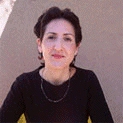 Valerie Martínez ‘s first book of poems, Absence, Luminescent (Four Way Books, 1999), won the Larry Levis Prize and received a Greenwall Grant from the Academy of American Poets. Her poems and translations have appeared in many journals and anthologies including Parnassus, Puerto del Sol, LUNA, The Bloomsbury Review, Solo, Prairie Schooner, the Colorado Review and The Best American Poetry 1996. Her work appears in American Poetry: Next Generation; New American Poetry: A Breadloaf Anthology; and Touching the Fire: Fifteen Poets of Today’s Latino Renaissance. Along with Joy Harjo and Gloria Bird, she edited the anthology Reinventing the Enemy’s Language: Contemporary Native Women’s Writing of North America (Norton, 1997). She is currently translating the work of Uruguay’s Delmira Agustini (1886-1914) and has translated the poetry of Mexico’s Miguel Méndez. Martinez has degrees from Vassar College (B.A.) and the University of Arizona (M.F.A.). She has taught writing at universities in Arizona and New Mexico, and in the rural schools of Swaziland (southern Africa). She leads poetry workshops for the Geraldine R. Dodge Foundation and is a Commonwealth Speaker for the Pennsylvania Humanities Council. She has also served as poet-in-residence in public schools in New Mexico and New Jersey. She is currently on the English faculty at Ursinus College in Collegeville, Pennsylvania.
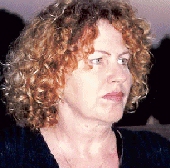 Agi Mishol
(b. 1947 Hungary), co-winner of the first Yehuda Amichai Poetry Prize, awarded this winter, is one of Israel’s most important contemporary poets; she is also a farmer, and a teacher of poetry in the MA Creative Writing Program at Ben Gurion University, as well as a literary critic and translator. The Dream Notebook, her ninth book of poetry, was published in Israel in 2001. A New and Selected Works, with an introduction by Professor Dan Miron, is forthcoming from Bialik Press in the fall.
Agi Mishol
(b. 1947 Hungary), co-winner of the first Yehuda Amichai Poetry Prize, awarded this winter, is one of Israel’s most important contemporary poets; she is also a farmer, and a teacher of poetry in the MA Creative Writing Program at Ben Gurion University, as well as a literary critic and translator. The Dream Notebook, her ninth book of poetry, was published in Israel in 2001. A New and Selected Works, with an introduction by Professor Dan Miron, is forthcoming from Bialik Press in the fall.
José Oliver is of Andalusian descent
and was born in 1961
in Hausach (Black Forest) where he lives as a
freelance writer. His poetry and songs reflect his
experience as a speaker of two native tongues –
German and Spanish. He has received various grants
and the 1997 Adalbert von Chamisso Prize. To date,
eight collections of his poetry have been published.
These translations are from fernlautmetz, published
by Suhrkamp in 2000.
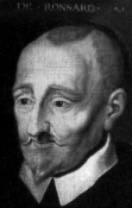 Pierre de Ronsard was born in 1524 and died in 1585. Ronsard was heading for
a life at court, but when he became deaf, he became more private and focused
on his studies; he entered the Collège de Coqueret and was the leader of the
Pléiade, a group of talented young poets including Joachim Du Bellay. Their
goal was to make French a viable and respected language for poetry as
opposed to the common use of Latin. He wrote many poems on many different
themes but is perhaps best known for his love poems Sonnets pour Hélène
published in 1578. Ronsards most famous poem in translation comes from this
collection — Yeat’s loose version of quand vous serez bien vielle or “When
You Are Old.”
Pierre de Ronsard was born in 1524 and died in 1585. Ronsard was heading for
a life at court, but when he became deaf, he became more private and focused
on his studies; he entered the Collège de Coqueret and was the leader of the
Pléiade, a group of talented young poets including Joachim Du Bellay. Their
goal was to make French a viable and respected language for poetry as
opposed to the common use of Latin. He wrote many poems on many different
themes but is perhaps best known for his love poems Sonnets pour Hélène
published in 1578. Ronsards most famous poem in translation comes from this
collection — Yeat’s loose version of quand vous serez bien vielle or “When
You Are Old.”
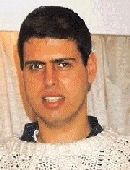 Rami Saari
(b. 1963 Israel) took his first two degrees at the University of Helsinki, and is completing his doctorate in linguistics at the Hebrew University, where he teaches. He has published four books of poetry in Hebrew (most recently The Living Book ), translates prolifically from Finnish, Turkish, Spanish, Greek and other languages into Hebrew, and writes literary reviews.
Rami Saari
(b. 1963 Israel) took his first two degrees at the University of Helsinki, and is completing his doctorate in linguistics at the Hebrew University, where he teaches. He has published four books of poetry in Hebrew (most recently The Living Book ), translates prolifically from Finnish, Turkish, Spanish, Greek and other languages into Hebrew, and writes literary reviews.
