|
Special Feature
A feature of the best
poetry writing from Queensland,
Australia, edited by Liz Hall-Downs,
including the work of Bronwyn Lea, Brett Dionysius, Melissa Ashley, Ross
Clark, Jayne Fenton Keane, David Reiter, Sara Moss,
and Kim Downs.
– –
– – – – – – – – – –
From Canada, poems by Seymour
Mayne and Wendy Morton.
– –
– – – – – – – – – –
From Israel: translations of Agi Mishol, Sharron Hass,
Admiel Kosman, Rami
Saari, translated by Lisa Katz. Also new
work by Karen Alkalay-Gut and Rochelle Mass.
– – – – – – – – – – – –
From Europe: new translations by Sean Chapman of Ronsard and by Johannes Beilharz of José Oliver. – – – – – – – – – – – –
From other areas of Australia the work of
Gig Ryan , and Helen
Hagemann – – – – – – – – – – – –
From South America a feature of Delmira
Agustini newly translated by Valerie Martinez.
– – – – – – – – – – – –
And from the U.S. poems by David Lehman, R.T. Smith, Eleanor
Lerman, Catherine Sasanov, Maureen Holm, Rosalind
Brackenbury, Susan Terris, Robert Gibbons, Catherine
Kasper, David Vance, Tania Rochelle, and Michael Standaert.
– – – – – – – – – – – –
Recommended
Reading
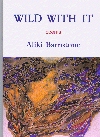
By Aliki
Barnstone. 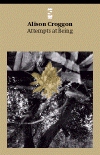
By
Alison Croggon. 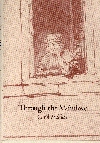
By Carol Moldaw.
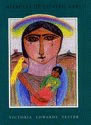
By Victoria Edwards Tester.
– – – – – – – – – – – –
Recent
Issues
Visit Winter 2002 with an
interview with 
Marvin Bell.
Take a look at Fall 2001 with an interview
with  Sam Hamill. Sam Hamill.
Summer 2001 with an interview with 
Arthur Sze
about his new translations from the Chinese, The Silk Dragon.
Spring 2001 an interview with 
Coral Hull.
– – – – – – – – – – – –
Issues 2000
Spring 2000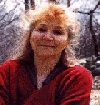
Ruth Stone.
Summer 2000
David Romtvedt.
Fall 2000

Eleanor Wilner.
Winter 2000
Tony Barnstone.
|
|
E-
Interview
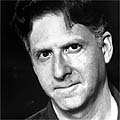 “In January 1996 I
began writing a poem a day as an experiment. At the time I was working
on The Last Avant-Garde: The Making of the New York School of
Poets, and in retrospect I imagine I began my daily poem project as
a way of getting close to the spirit of two of the New York School’s
four founding figures, Frank O’Hara and James Schuyler.” An
e-interview with David Lehman.
By Rebecca Seiferle. “In January 1996 I
began writing a poem a day as an experiment. At the time I was working
on The Last Avant-Garde: The Making of the New York School of
Poets, and in retrospect I imagine I began my daily poem project as
a way of getting close to the spirit of two of the New York School’s
four founding figures, Frank O’Hara and James Schuyler.” An
e-interview with David Lehman.
By Rebecca Seiferle.
– – – – – – – – – – – – – – – – – –
– – – – – –
Visuals
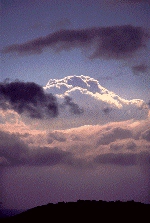 A
selection of original digital photographs, Spring
2002, images of light and darkness in the spirit of the times, from
Reva Sharon, award-winning Israeli photographer. A
selection of original digital photographs, Spring
2002, images of light and darkness in the spirit of the times, from
Reva Sharon, award-winning Israeli photographer.
– – – – – – – – – – – – – – – – – –
– – – – –
–
Online

“Now in
a second year of publishing, the goals of Fluid
Ink Press remain quite simple. A commitment to bringing only the
best in verse to the public eye, with a high quality of presentation and
providing an environment for the free thinker in all of us.” By
Scott Villarosa, Editor.
 “From its inception in 1998, Janus
Head, as an interdisciplinary journal, has aimed to be that opened door
at the threshold of a newly charged dialogue among the disciplines.
Disciplines themselves are human demarcations, boundaries built across
the phenomenal field, both opening up and closing off the thought of one
disciplinary domain or another. The interdisciplinary space, then, is
one that seeks to give rise to other, provocative modes of revealing, to
freshen the blood of the disciplines by interjecting and crossing
different bodies of thought, to give credence to various manifestations
of truth in human knowledge and experience. ” By
Claire Barbetti, Editor. “From its inception in 1998, Janus
Head, as an interdisciplinary journal, has aimed to be that opened door
at the threshold of a newly charged dialogue among the disciplines.
Disciplines themselves are human demarcations, boundaries built across
the phenomenal field, both opening up and closing off the thought of one
disciplinary domain or another. The interdisciplinary space, then, is
one that seeks to give rise to other, provocative modes of revealing, to
freshen the blood of the disciplines by interjecting and crossing
different bodies of thought, to give credence to various manifestations
of truth in human knowledge and experience. ” By
Claire Barbetti, Editor.

“. . .was established in
1998 as a literary arts magazine by Australian poet Alison Croggon and
was produced for four issues as a print journal. It has now moved
exclusively to the internet for its second incarnation as an occasional
journal which embraces writings about poetry, poetics, theatre,
contemporary music, politics and much else.” By
Alison Croggon, Editor.
 “Appearing quarterly,
each issue offers a variety of thought-provoking articles, poetry, short
stories, essays, artwork, photography, irreverent humor, and
off-the-wall items from off the beaten path. The editorials provide an
opportunity for The ScreamOnline
to pick on anything and everyone. . .” By Stuart
Vail, Editor. “Appearing quarterly,
each issue offers a variety of thought-provoking articles, poetry, short
stories, essays, artwork, photography, irreverent humor, and
off-the-wall items from off the beaten path. The editorials provide an
opportunity for The ScreamOnline
to pick on anything and everyone. . .” By Stuart
Vail, Editor.

“. . .an independent literary journal featuring the best writings
from the new south. Our magazine attempts to capture all the aspects of
the modern-day south, from the curse of racism to the budding promise of
racial cooperation, from Civil War reenactors to those who see no
purpose in battles that are a hundred and fifty years old.” By
Jason Sanford, Editor.
 “One of Waxpoetic‘s
developments is the poetry reading begun in the summer of 2001. The
venue is Pete’s Candy Store, an Italian shop that once sported an
illegal gambling den in back. A friend converted the shop into a bar and
the casino into a performance space about two years ago. My series
provides an eclectic sampling of poetry in our predominately visual arts
enclave.” By Joelle Hann, Editor. “One of Waxpoetic‘s
developments is the poetry reading begun in the summer of 2001. The
venue is Pete’s Candy Store, an Italian shop that once sported an
illegal gambling den in back. A friend converted the shop into a bar and
the casino into a performance space about two years ago. My series
provides an eclectic sampling of poetry in our predominately visual arts
enclave.” By Joelle Hann, Editor.
– – – – –
– – – – – – –
Presses
“As a literary
publisher I still look for good writing as the key element of any
multimedia project. And I look for projects with potential for cross
artform presentation because I believe that these kinds of titles will
enlarge the audience for literary work. This sets us apart from many
publishers who tend to be more conservative about what they take on. On
the other hand the work has to have a redeeming commercial value, too.
So we walk the tightrope of encouraging hybrid forms while at the same
time only taking on work that we think will find a willing market.”
By David Reiter, Editor.
– – – – – – – – – – – –
Resources for Writers

“. . .has become legendary. Each year audiences of writers and
readers are dazzled by the créme de la créme from different
genre (biography, journalism, memoir, nature writers, etc.), always with
poets present and poet participants, but in 2003 the subject is POETRY.
And poets will abound.” By Kay Putney Gantt.
 “I’ve hosted a poetry series in Victoria, B.C. for
three years; nearly every Friday night for three years. We have an open
mike, followed by a featured reader. . .Mocambopo. . . has been going on since
1995.” By Wendy Morton, Host. “I’ve hosted a poetry series in Victoria, B.C. for
three years; nearly every Friday night for three years. We have an open
mike, followed by a featured reader. . .Mocambopo. . . has been going on since
1995.” By Wendy Morton, Host.
– – – – – – – – – – – –
In Print
 “We both publish poetry in on-line zines and love doing this for
its immediacy and because of the large numbers of people who read poetry
this way today. But still we both believe that putting out a print
journal in this era of internet and superfast communication is an act of
faith. We like to think there are many people like us who still love
the feel of paper and the smell of fresh ink. . .” By Susan
Terris, Co-editor.
“We both publish poetry in on-line zines and love doing this for
its immediacy and because of the large numbers of people who read poetry
this way today. But still we both believe that putting out a print
journal in this era of internet and superfast communication is an act of
faith. We like to think there are many people like us who still love
the feel of paper and the smell of fresh ink. . .” By Susan
Terris, Co-editor.
– – – – – – – – – – – –
Continuing Features

We are pleased to announce the latest from
Archipelago: “Some of us remember, perhaps from our
childhood, the horrible story of the murder of a black youngster, Emmett
Till, by two white men in Mississippi. We offer a series of reports on
the aftermath by James L. Hicks. “Jimmy” Hicks was an eminent black
reporter who went down to Sumner, Miss., to cover the trial.
Investigating amid the fearful atmosphere in the African American
community, he uncovered facts and the whereabouts of a crucial witness,
who nonetheless was never called to testify.” By
Katherine McNamara, Editor.
– – – – – – – – – – – –
|
|
|
|
|
January 23, 1950 —
March 25, 2002
– – – – – – – – – – – –
E-Chapbook
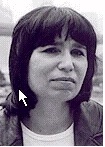 An e-chapbook and interview with
Eleanor Lerman, an exciting poet of the 70’s who has just come back to
poetry and publishing with An e-chapbook and interview with
Eleanor Lerman, an exciting poet of the 70’s who has just come back to
poetry and publishing with 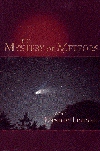 The Mystery of Meteors from Sarabande
Press. The Mystery of Meteors from Sarabande
Press.
– – – – – – – – – – – –
Poetry and Healing: Two Chapbooks
 Breast Art, a
chapbook by Israeli poet and translator, Lisa Katz. Breast Art, a
chapbook by Israeli poet and translator, Lisa Katz.
 My Arthritic Heart a chapbook by Australian
poet, Liz Hall-Downs. My Arthritic Heart a chapbook by Australian
poet, Liz Hall-Downs.
– – – – – – – – – – – –
Columns
 riverviews riverviews “ When, in flash
and crumble, the towers came down, the way to the river of childhood
opened, sequence was disestablished, and speech fell apart, exposing the
inchoate roots of language—all that I had wished for, I was
inconsolable, one of thousands of sudden Ereshkigals.”
By J.C. Todd.
– – – – – – – – – – – –
|